
In this inspiring guest post, writer Kathryn Gauci takes us to Crete in search of the island’s soul — the spirit of Zorba that still lives on in its people, landscapes, and traditions. I loved how she weaves together history, authentic Cretan flavors, mountain villages, and quiet, meaningful encounters that reveal a deeper, timeless Greece.
Her journey made me long to wander through Rethymno’s old alleys, escape to hidden hamlets like Milia (which by the way I visited myself many years ago and found truly unique), and experience that beautiful sense of philotimo that defines true Cretan hospitality. Kathryn’s reflections are a gentle reminder of why travel is as much about connection as it is about exploring a place.
Enjoy — and do look out for Kathryn Gauci’s books and her travel memoir An Aegean Odyssey!
By Kathryn Gauci
When planning my journey through the Greek Islands for An Aegean Odyssey: A Memoir, I decided to leave Crete until the last because it is both a very large island and has so much to offer in terms of history, food, and spectacular scenery. Each province is different. When I was living in Athens in the 1970s, I had Cretan friends and also admired the way other Cretan men would dress when I saw them shopping in the main food market in Athinas Street. With their high boots, cummerbunds, cloaks, and headbands, they cut a striking figure. I always thought of Nikos Kazantzakis and the spirit of Zorba and hoped I would still find it in Crete. I did – everywhere. Keep reading to learn about a couple of places where you can still find the old Greece that still encompasses the history, food, beauty, and Cretan ethos.
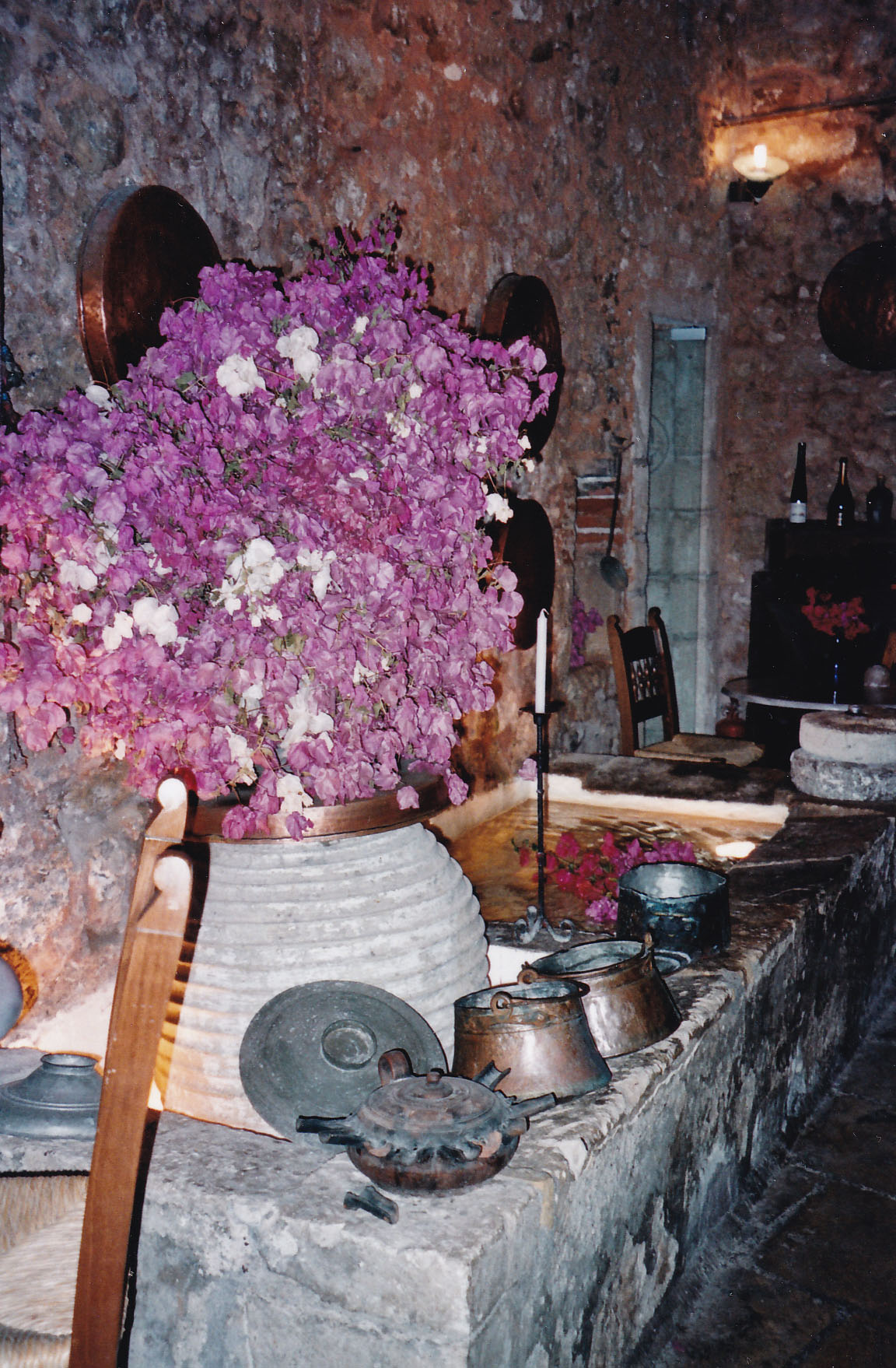
Hamman at Hotel Veneto, Rethymno (c) Kathryn Gauci
Rethymno
My journey begins in Rethymno, where the old quarter is both mysterious and evocative, a fusion of Venetian loggia and graceful Ottoman mansions in narrow laneways where the crumbling stucco is enriched by a kaleidoscope of cascading bougainvillea. It was here that I found the Hotel Veneto, and I am glad to say that it is still there, a haven of the old Crete amid the ever-flourishing tourist haunts.
The hotel started life as a Dominican Monastery in the 15th century. It was renovated by the great Venetian architect, Michele Sanmicheli, who constructed the fortress of Rethymno. Under the Ottomans, it was taken over by Bey Risvan for his widowed sister. At the beginning of the 20th century, it was given by the Greek Government to the Prokopakis family as acknowledgement for Emmanuel G. Prokopakis’s contribution to aiding the Greeks against the Macedonian Rebellion (1903-1908). It was here in 2005 that I met Kyria Maria, Emmanuel’s granddaughter, who ran the hotel with her son. As soon as I arrived, she gave me a tour and told me about its history, proudly showing me the photograph of her grandfather which takes pride of place in on one of the rooms. The family endeavored to keep the integrity of the hotel: the small hammam is now a wine cellar, the courtyard with its Venetian fountain is where breakfast is served, and most of the rooms still maintain the vaulted roofs with old embroidery artifacts adorning the walls.
It is not only the ambiance that was wonderful, but the food too. Great care is taken to serve food adhering to the methods of cooking in the old days. One of my favourites was the lamb. Stuffed with a soft Cretan cheese, honey and currants, it was folded into a roll, wrapped in vine leaves and cooked until succulent and moist. The use of honey was a sweetener in the old days. This was followed by a palette-cleanser of watermelon rind spoon fruit, one of the most delicate spoon sweets I’ve ever tasted. And then there was her breakfast, for which she is well known. Omelette Veneto style, which she cooks herself, tiganites, loukoumades, a special cake from Sfakia, and much more. No dieting here. You will have to walk off the calories which I tried to do on the next part of my trip.
Where to stay in Crete, Greece
Activities to do in Crete, Greece
How to Get There – Check your Airplane Tickets Here
How to Get There – Book Your Ferry Tickets Here
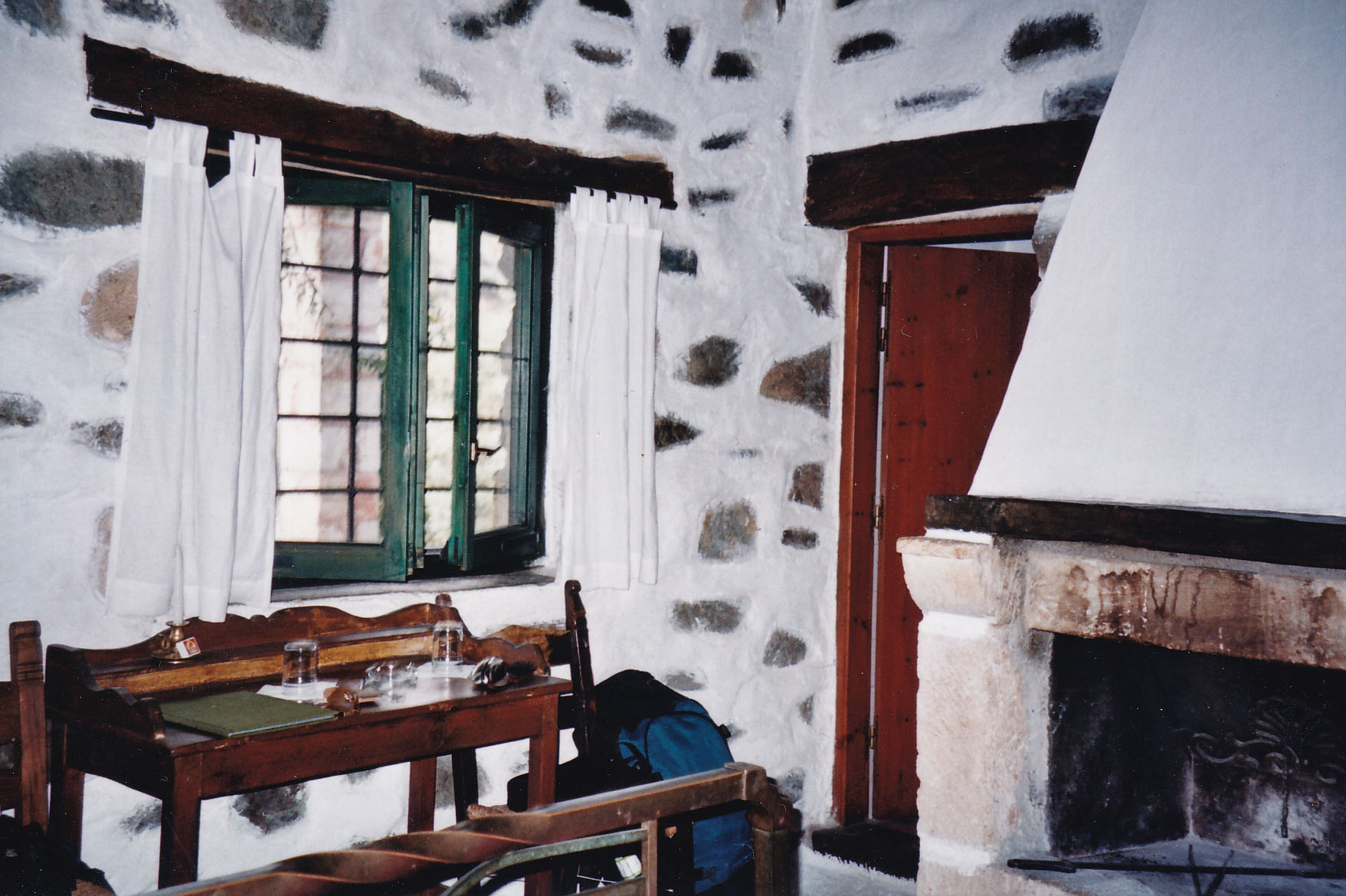
Kathryn’s room in Milia, Crete (c) Kathryn Gauci
Milia
Leaving Rethymno, I headed for the Ennia Horia (nine villages), high in the mountains of Selino Province. The drive alone was superb. Through deep gorges until the road gradually narrows as it reaches the mountain tops, snaking around hairpin bends where Griffin vultures, masters of the air, circle in the vast open sky. At this point, I couldn’t see any sign of a village, but the dirt road was too narrow to turn around. All of a sudden, the road turned and I found myself in a beautiful narrow valley – a secret world filled with chestnuts trees with lush undergrowth carpeted with wildflowers and cyclamen. I had arrived at Milia, a hamlet that for almost two centuries remained hidden from the outside world.
Milia (the Greek word for apple tree), was struck by cholera in the 17th century and remained deserted for many years. Prior to WWII, it was inhabited by 12 families and its hidden location was ideal for evading the Germans. In 1982, Milia was brought to life again by two families who, with the aid of EUC money and private investments, developed it into an eco hamlet to conform with life as it would have been years ago. Most of the food is produced there, nothing is wasted, and it has solar energy and its own generator for electricity, although I dined by candlelight in the restaurant there.
My cottage, one of only a handful, was as it would have been over the years: stone walls, a fireplace, hand-woven cotton sheets on the bed. Here, I was enveloped in a peaceful silence punctuated only by the sounds of nature enhanced by the scent of the earth. In this stress-free environment, I enjoyed every single moment, especially the meals that were offered, particularly toasted pork and chestnuts in red wine, cooked in the oven as it would have been years ago. Being an eco-sensitive village, food here is as it should be – seasonal – and being autumn, chestnuts were in abundance. I was also given a wonderful dish of moustalevria, grape-must jelly. It is not easy to make at home as the old recipe requires ‘must’ from the first pressing of the grape harvest and boiled with two tablespoons of wood ash tied in muslin. The ash clarifies the juice. Wonderful: smooth and silky with the delicate perfume of ripe grapes. The waiter tells me proudly that he has made it and gives me another helping. This is Cretan food at its best, unpretentious and in a glorious setting.
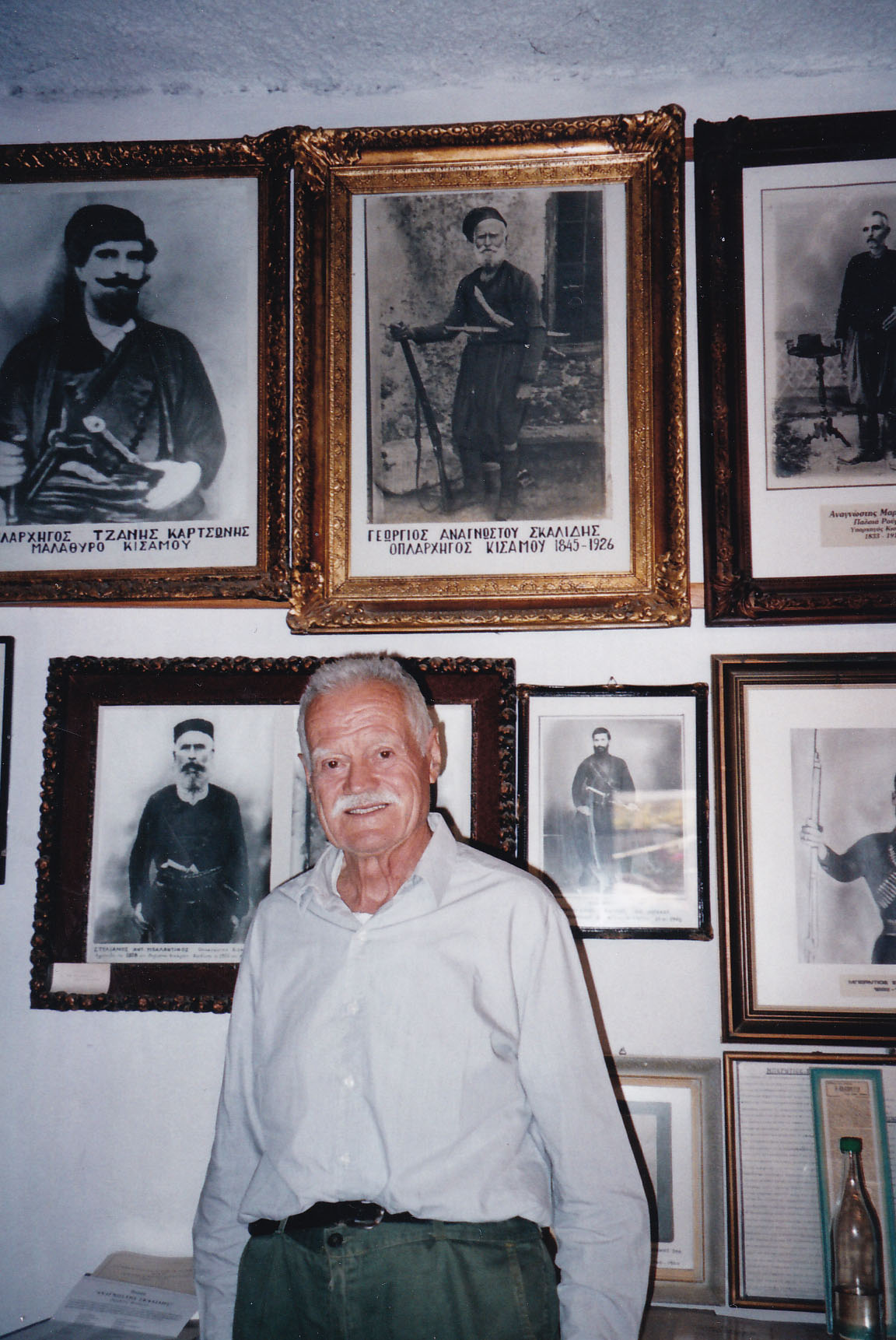
Zaccariah at the war museum in Perivolia (c) Kathryn Gauci
Perivolia
For a side trip from Milia, there is a nearby museum in another hamlet, Perivolia. At the time it was not in the guide books. The whitewashed house once belonged to Zaccariah Skalithes’s grandfather and he has now turned it into a museum, not only of WWII, but of the struggles against the Ottomans. Photographs and guns line the walls, all belonging to his brave ancestors. I could not help being touched by looking into the eyes of some of the most important men of the Cretan Revolts. Zaccariah’s brother was executed by the Germans in 1944 as part of reprisals against the resistance, yet these days, his son works in Germany and is happy. “Etsi einai I zoe,” he said. “That’s life.”
Philotimo
As I left, philotimo, that giving to a guest as a sense of honour and wanting nothing back in return, which Greeks are famous for, was shown to me yet again when his wife handed me a handful of locally grown peanuts and a piece of cake. There’s so much more to explore in Crete.
Spirit found
The whole visit was intently emotional, and everywhere I found that Cretan spirit: defiant, intense, and yet full of sensitivity – the spirit of Zorba. Not only that, but after embarking on a two month trip alone, somewhat apprehensively at first, everything turned out positively. I had discovered a serenity and sense of freedom that I never imagined possible. I had no idea where the trip would take me: I left that to fate. In the end, fate was kind to me. Free to wander wherever I wanted to, I was at peace with myself, and I wasn’t even aware it was happening.
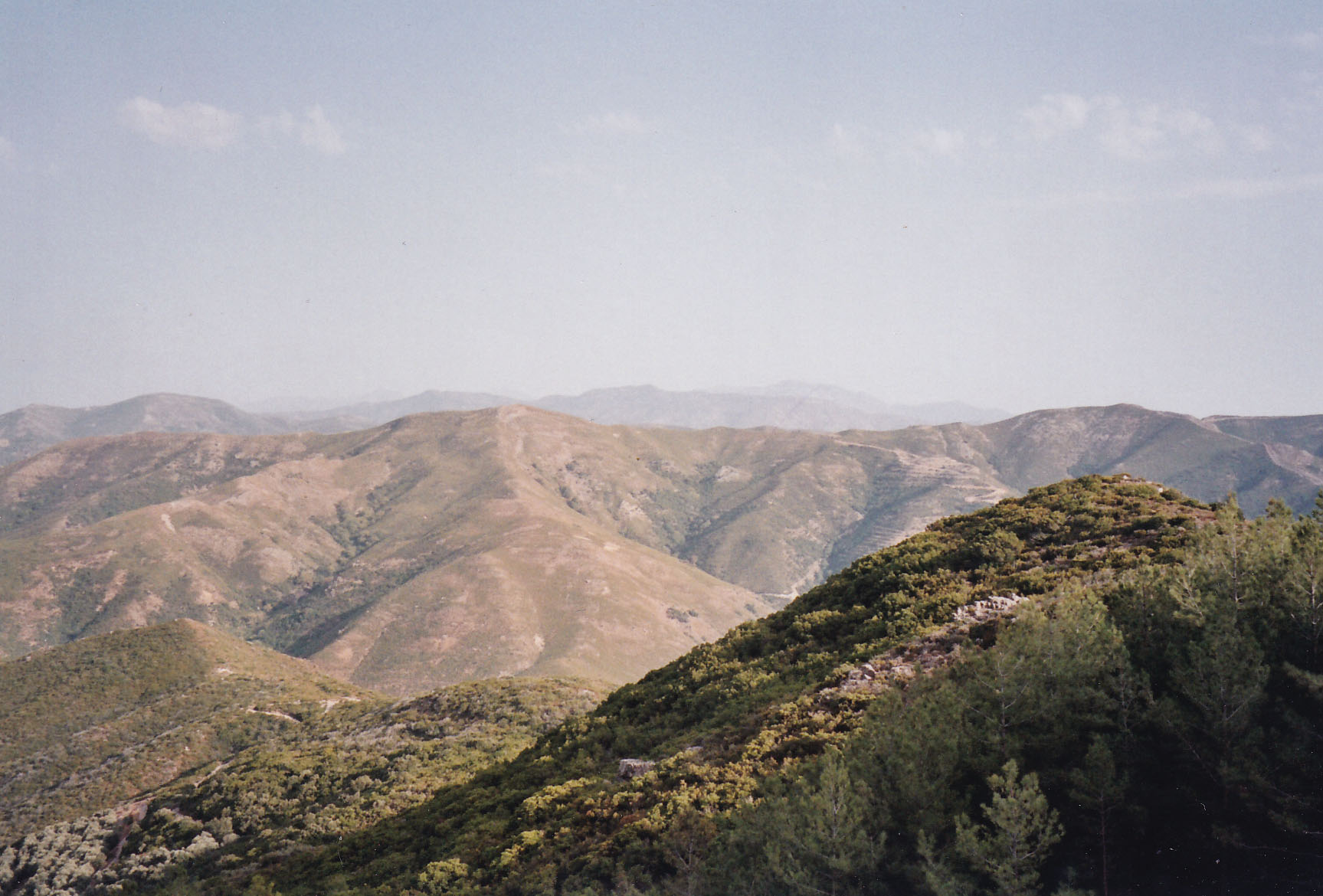
The road to Milia (c) Kathryn Gauci
Where to stay in Crete, Greece
Activities to do in Crete, Greece
How to Get There – Check your Airplane Tickets Here
How to Get There – Book Your Ferry Tickets Here
—
USA Today Bestselling Author Kathryn Gauci is the recipient of numerous major international awards for her works of historical fiction set in Greece, Austria, France, and Turkey.
Before becoming a full-time writer, Kathryn worked in Greece as a carpet designer in the 1970s. More recently, she owned and operated a textile design studio in Melbourne, which brought many opportunities to travel worldwide and experience other cultures.
Her first novel, The Embroiderer, was the culmination of years of design and travel and the glorious years of her youth living and working as a textile designer in Greece. She’s the author of 13 historical novels and an adult coloring book. She contributed to the acclaimed The Darkest Hour Anthology. Her latest book, her first travel memoir, An Aegean Odyssey, in which she visits Athens, Chios, Lesvos, Rhodes, Karpathos, and Crete, is out now.
Photos: all photos in this article are kindly provided by Kathryn Gauci (unless otherwise mentioned)
Connect with Kathryn Gauci here:
Read more articles here:
Family Travel and Food Guide to Naxos
Travel & food guide to Sithonia, Halkidiki
Family holidays in Preveza, Greece – What to do
Insider’s Guide – Discover Naxos with Lena Vlastara
Insider’s Guide – Syros for families by Betty Chatzisavvidou
Zagori, Greece – Family-friendly Travel Itinerary
Insider’s guide to Ikaria island, Greece – by Areti Kotsore
Disclaimer: This post contains affiliate links. It’s one of the ways I get paid as a content creator – if you make any purchases using my links, I might earn a commission at no extra cost to you. Thank you for supporting me as a content creator.
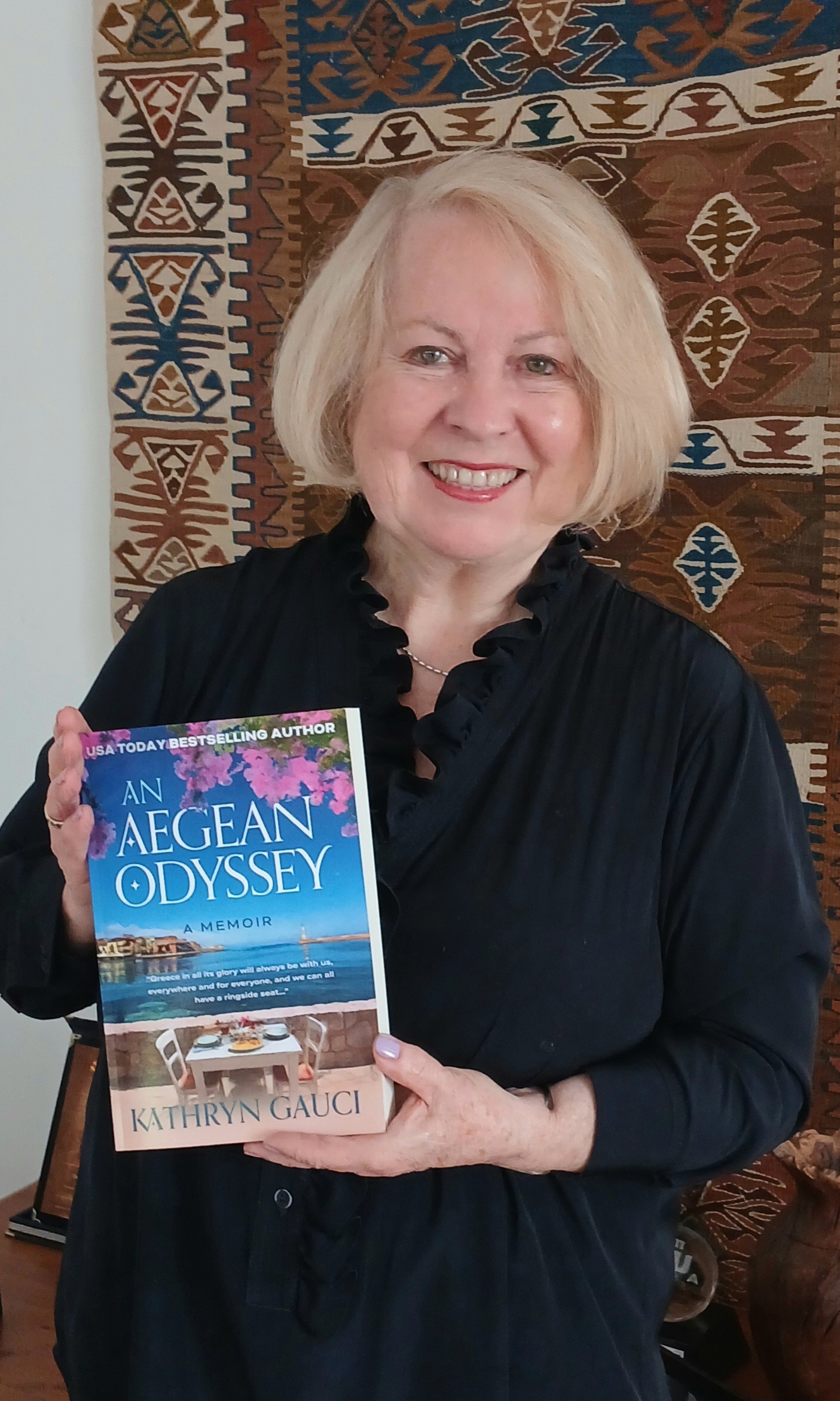
Kathryn Gauci with her book, An Aegean Odyssey
